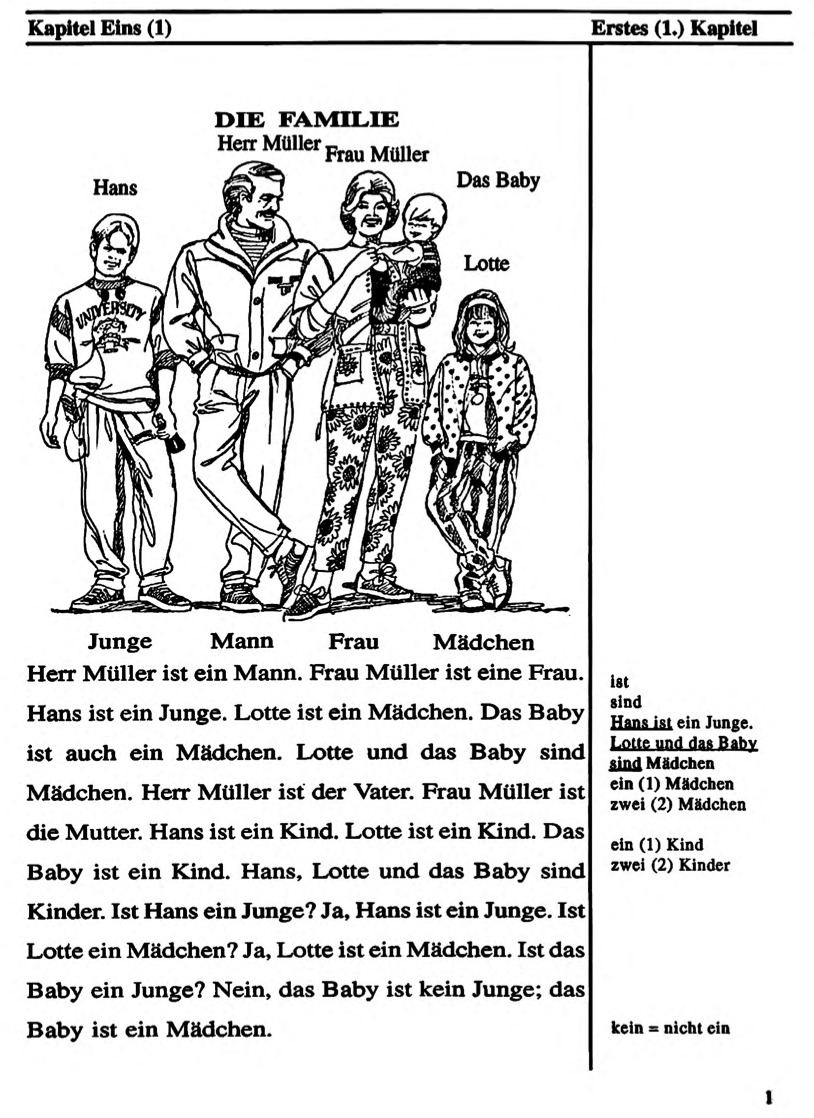
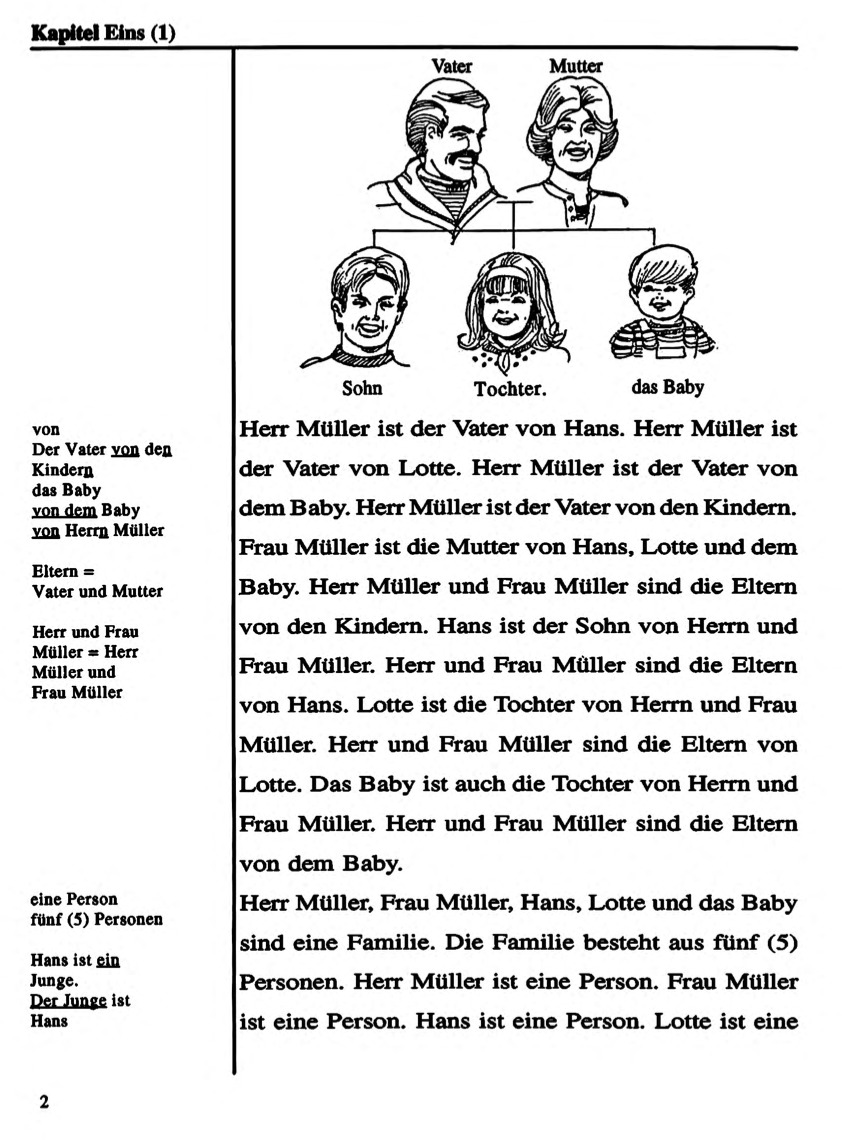
把assimil德语书让gemini3.0识别了一遍。文字品质非常高,基本没有文字错误
但是识别的时候,因为扫描pdf是两页一张(左页德语右页英语)的顺序,很多东西需要自己调整顺序。我现在没有精力弄,有人有兴趣的话我发上来。
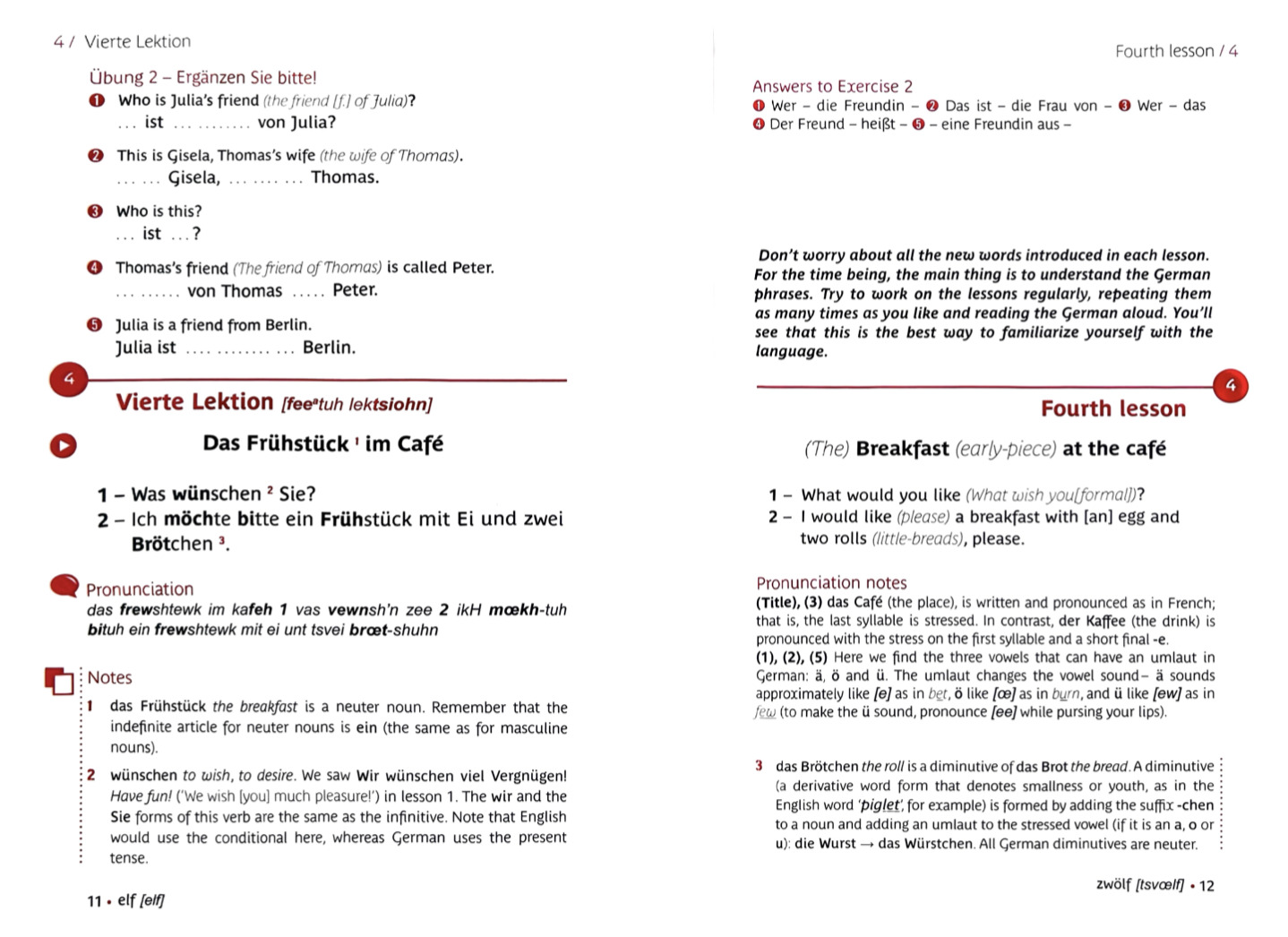
Übung 2 – Ergänzen Sie bitte!
1 Who is Julia’s friend (the friend [f.] of Julia)?
… ist … von Julia?2 This is Gisela, Thomas’s wife (the wife of Thomas).
… … Gisela, … … Thomas.3 Who is this?
… ist …?4 Thomas’s friend (The friend of Thomas) is called Peter.
… … von Thomas … Peter.5 Julia is a friend from Berlin.
Julia ist … … Berlin.Answers to Exercise 2
1 Wer – die Freundin – 2 Das ist – die Frau von – 3 Wer – das 4 Der Freund – heißt – 5 – eine Freundin aus –Don’t worry about all the new words introduced in each lesson. For the time being, the main thing is to understand the German phrases. Try to work on the lessons regularly, repeating them as many times as you like and reading the German aloud. You’ll see that this is the best way to familiarize yourself with the language.
Vierte Lektion [feeªtuh lektsiohn]
Das Frühstück ¹ im Café
1 – Was wünschen ² Sie?
2 – Ich möchte bitte ein Frühstück mit Ei und zwei Brötchen ³.Fourth lesson
(The) Breakfast (early-piece) at the café
1 – What would you like (What wish you[formal] )?
2 – I would like (please) a breakfast with [an] egg and two rolls (little-breads), please.Pronunciation
das frewshtewk im kafeh 1 vas vewnsh’n zee 2 ikH mœkh-tuh bituh ein frewshtewk mit ei unt tsvei brœt-shuhnNotes
1 das Frühstück the breakfast is a neuter noun. Remember that the indefinite article for neuter nouns is ein (the same as for masculine nouns).
2 wünschen to wish, to desire. We saw Wir wünschen viel Vergnügen! Have fun! (‘We wish [you] much pleasure!’) in lesson 1. The wir and the Sie forms of this verb are the same as the infinitive. Note that English would use the conditional here, whereas German uses the present tense.Pronunciation notes
(Title), (3) das Café (the place), is written and pronounced as in French; that is, the last syllable is stressed. In contrast, der Kaffee (the drink) is pronounced with the stress on the first syllable and a short final -e.
(1), (2), (5) Here we find the three vowels that can have an umlaut in German: ä, ö and ü. The umlaut changes the vowel sound– ä sounds approximately like [e] as in bet, ö like [œ] as in burn, and ü like [ew] as in few (to make the ü sound, pronounce [ee] while pursing your lips).3 das Brötchen the roll is a diminutive of das Brot the bread. A diminutive (a derivative word form that denotes smallness or youth, as in the English word ‘piglet’, for example) is formed by adding the suffix -chen to a noun and adding an umlaut to the stressed vowel (if it is an a, o or u): die Wurst → das Würstchen. All German diminutives are neuter.