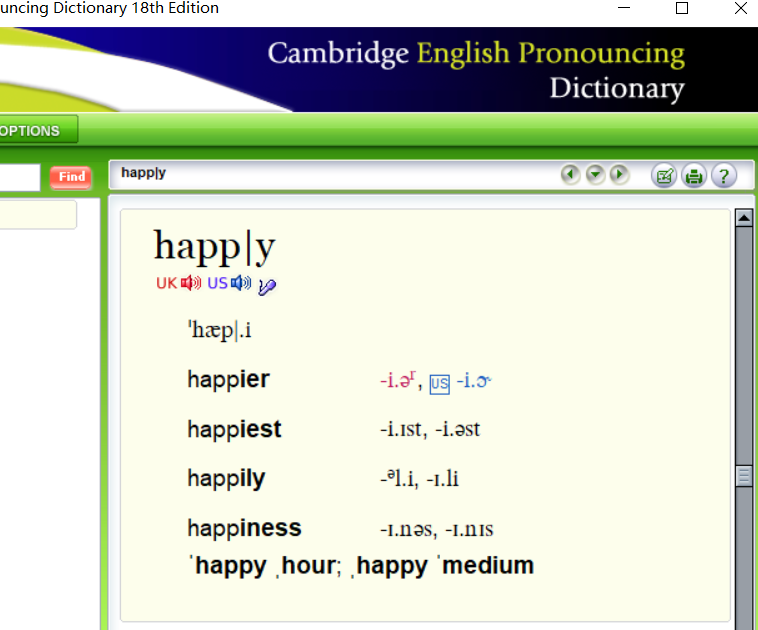
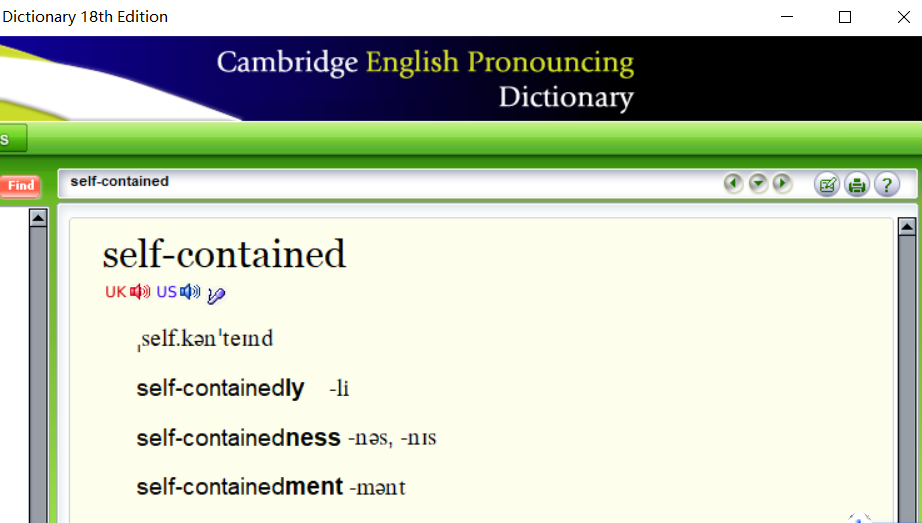
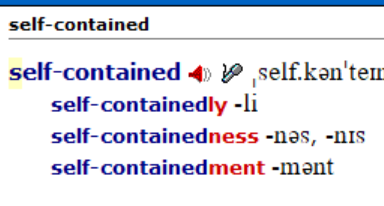
When inflected or derived forms are shown in the entry, the orthographic strings printed are morphological markers for pronunciation reference only, not prescriptive orthographic spellings. The dictionary’s primary purpose is to provide IPA transcriptions; where a spelling rule would alter the final letter of the base word (e.g. changing final -y to -i- before -er / -est / -ness), we retain the base form’s spelling in the displayed form, to make it transparent that the pronunciation is simply the base pronunciation plus the suffix pronunciation. Users should consult general English dictionaries for standard orthography.
词条中列出的屈折、派生形式,其字母串仅作为供发音参考的形态标记,不是规定性的标准拼写。本词典首要目标是提供国际音标;当拼写规则会改变词根末尾字母(例如在 -er /-est/-ness 前把词尾 - y 改为 - i-)时,我们在展示形式上保留词根原本拼写,以便直观体现读音 = 词根读音 + 后缀读音。使用者需要查阅通用英语词典获取标准正字拼写。
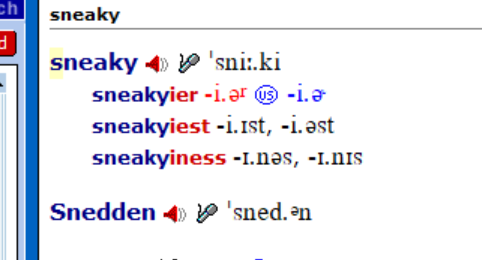
CEPD writes comparative/superlative forms like sneakyier rather than sneakier. This is not a typo. It is a long-standing convention of the EPD series: they show the form as base + suffix orthographically, so you can immediately see how the pronunciation is built from the base plus ending. Learners must be warned that these are not spellings to use in writing.
(Antimoon, Review of CEPD 17)
CEPD 把比较级写成 sneakyier 而不是 sneakier,这不是印刷错误。这是 EPD 系列沿用很久的惯例:在书写上写成「词根 + 后缀」,让读者一眼看清读音是词根加上后缀构成的。必须提醒学习者,这些形式不能作为写作拼写。